
One of the biggest challenges facing procurement professionals is that there is no single chemical market.
Chemical demand is ultimately derived from the industries that consume chemical products. When semiconductor manufacturing expands, electronic chemicals benefit. When construction slows, demand for coatings, PVC and insulation materials weakens. When pharmaceutical production grows, demand for high-purity solvents, intermediates and packaging materials rises.
This is why the American Chemistry Council's End-Market Growth Tracker provides valuable commercial intelligence. Rather than forecasting the chemical industry in isolation, it evaluates the health of the industries that ultimately drive chemical consumption.
For procurement teams, understanding these downstream demand signals provides an additional planning tool alongside commodity pricing and logistics intelligence.
More End Markets Are Expected to Grow
Compared with 2025, the 2026 outlook shows broader growth across a larger number of downstream industries.
This represents a gradual improvement in overall industrial demand rather than a broad-based boom.
The recovery remains uneven, with some sectors expanding rapidly while others continue adjusting to structural economic challenges.
For procurement professionals, this means purchasing strategies should increasingly become sector-specific rather than relying on a single industry-wide demand assumption.
Semiconductors Continue Driving High-Value Chemical Demand
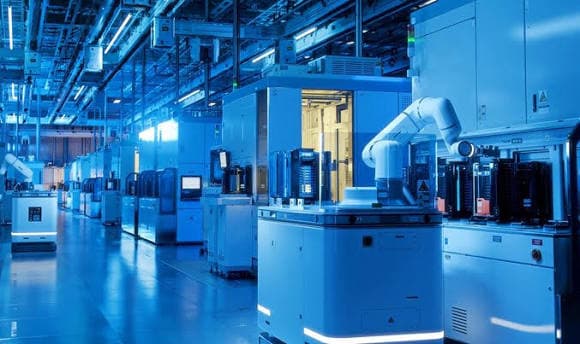
One of the strongest growth areas remains semiconductor manufacturing.
Investment in artificial intelligence infrastructure, cloud computing, advanced packaging and data centre expansion continues supporting demand for electronic chemicals.
Growth areas include:
Ultra-high-purity process chemicals.
Electronic specialty gases.
Wet process chemicals.
Advanced photoresist materials.
Semiconductor cleaning chemicals.
These products typically command higher margins than commodity chemical products while benefiting from long-term structural technology investment.
Healthcare and Pharmaceuticals Remain Structural Growth Markets
Healthcare continues representing one of the industry's most resilient demand sectors.
Several long-term factors continue supporting chemical consumption, including:
Aging populations.
Increased pharmaceutical production.
Expanding biologics manufacturing.
Growing medical packaging demand.
Continued investment in healthcare infrastructure.
Demand associated with next-generation therapies and broader pharmaceutical manufacturing continues supporting specialty chemical consumption despite wider economic uncertainty.
Agriculture Continues Supporting Essential Chemical Demand
Food security remains one of the world's most stable sources of chemical demand.
Agricultural production continues requiring substantial volumes of:
Fertilizers.
Crop protection chemicals.
Seed treatment products.
Water treatment chemicals.
Food processing ingredients.
Although seasonal conditions influence annual purchasing patterns, agricultural demand generally remains less cyclical than many industrial markets.
Not Every End Market Is Recovering Equally
While several downstream industries continue strengthening, others remain under pressure.
Published industry outlooks indicate ongoing challenges in areas including:
Traditional automotive manufacturing.
European residential construction.
Commercial real estate development.
Energy-intensive industrial manufacturing.
For chemical producers serving these sectors, demand recovery may remain slower than in technology or healthcare-related markets.
Procurement Should Follow Customer Industries, Not Just Chemical Prices
One of the most practical applications of the ACC's end-market analysis is its ability to improve procurement forecasting.
Rather than relying exclusively on commodity price trends, procurement teams should monitor the health of the industries purchasing their products.
Key questions include:
Which customer industries are expanding?
Which sectors are reducing production?
Where is capital investment increasing?
Which industries are likely to increase chemical consumption?
Where might inventory correction continue?
Answering these questions enables procurement teams to align purchasing volumes more closely with actual downstream demand.

Growth Markets Will Continue Attracting Investment
The industries showing the strongest demand outlook are also likely to attract the greatest capital investment throughout H2 2026.
These include:
Semiconductors and Electronics
Supported by:
Artificial intelligence infrastructure.
Advanced chip manufacturing.
Data centre expansion.
High-performance computing.
Electronics supply chain investment.
These trends continue driving demand for high-purity specialty chemicals.
Healthcare and Pharmaceuticals
Growth remains supported by:
Aging populations.
Expanding pharmaceutical production.
Increased biologics manufacturing.
Higher healthcare expenditure.
Continued demand for advanced medical packaging.
These structural drivers provide long-term stability for pharmaceutical chemical suppliers.
Agriculture and Food
Demand continues benefiting from:
Global food security priorities.
Fertilizer consumption.
Crop protection products.
Food ingredient manufacturing.
Agricultural productivity investment.
Unlike many industrial sectors, agricultural demand is driven primarily by global food requirements rather than discretionary consumer spending.
Some Industries Continue Facing Structural Headwinds
Not every downstream sector is expected to recover at the same pace.
Several industries continue operating under more challenging conditions.
Traditional Automotive Manufacturing
The industry's gradual transition toward electrification is changing chemical consumption patterns.
While electric vehicles create demand for new materials, they also reduce demand for certain chemicals traditionally associated with internal combustion engine manufacturing.
As a result, chemical demand is evolving rather than growing uniformly across the automotive sector.
European Construction
Construction activity—particularly within parts of Europe—continues facing weaker market conditions.
Lower residential development, slower commercial investment and cautious industrial construction continue affecting demand for products such as:
PVC.
Coatings.
Adhesives.
Construction polymers.
Insulation materials.
Recovery is expected to remain gradual rather than immediate.
Procurement Planning Should Become End-Market Specific
One of the biggest lessons from the ACC's demand outlook is that procurement strategies should increasingly reflect customer industry dynamics rather than treating chemical demand as a single market.
Recommended actions include:
Segment customers by end-use industry.
Develop separate demand forecasts for high-growth and slow-growth sectors.
Adjust inventory policies based on customer industry trends.
Monitor downstream capital investment announcements.
Update procurement assumptions as end-market conditions evolve.
This approach enables more accurate purchasing decisions while reducing inventory risk.
Looking Ahead to H2 2026
The ACC's End-Market Growth Tracker reinforces an important principle for chemical procurement: demand is ultimately driven by the performance of downstream industries rather than the chemical sector alone. While overall industry conditions continue improving compared with 2025, growth remains highly uneven across different customer segments.
Technology, healthcare and agriculture continue benefiting from strong structural demand supported by long-term investment trends, demographic change and global food requirements. At the same time, traditional automotive manufacturing and parts of the European construction market continue adjusting to economic and structural challenges that may limit near-term chemical consumption.
For procurement professionals, the most valuable lesson is to shift from a single industry-wide forecast toward customer-specific demand planning. Companies that align procurement strategies with the growth outlook of their downstream markets—rather than relying solely on commodity prices or headline chemical forecasts—will be better positioned to optimise inventory, strengthen supplier relationships and respond more effectively throughout H2 2026.
Ready to source specialty and industrial chemicals from verified global suppliers? Explore competitive offers on our platform today.
Isopropyl Alcohol (IPA) (99.7%) - China CAS: 67-63-0